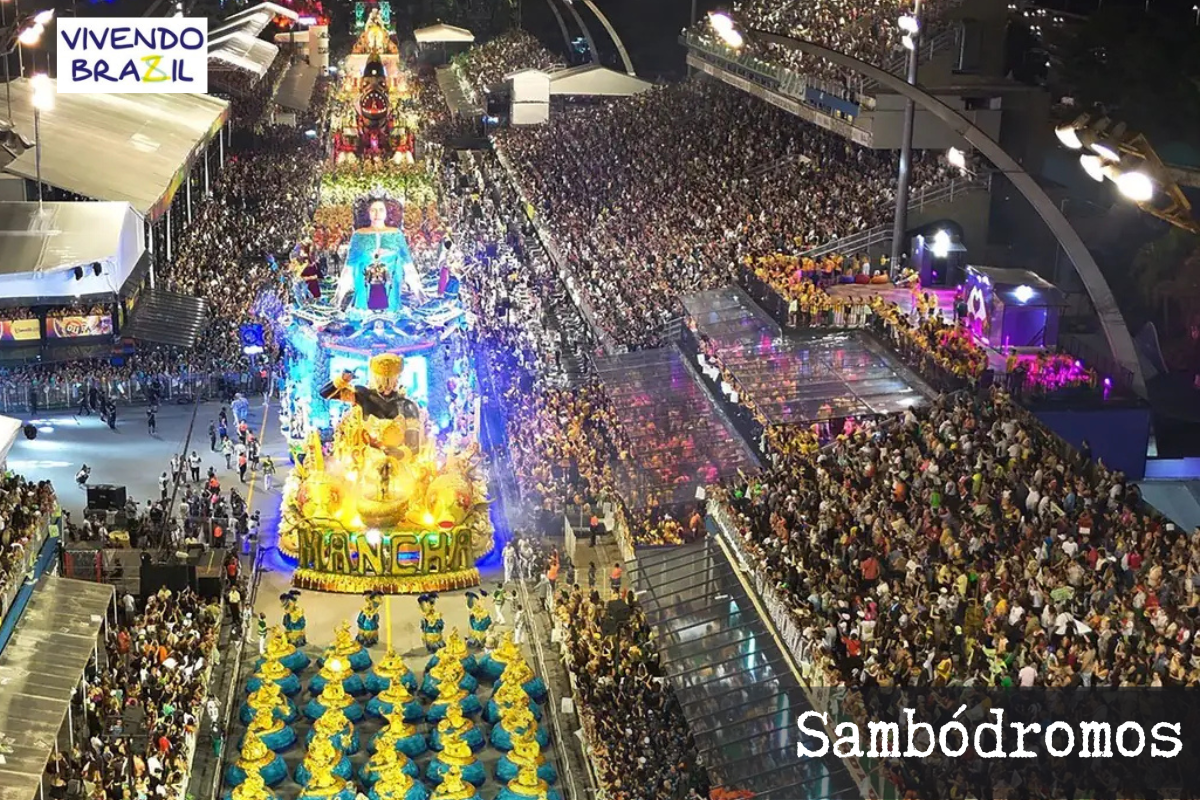
The sambódromos of Rio de Janeiro and São Paulo are iconic symbols of Brazilian Carnival, reflecting distinct cultural and structural identities. Both were designed by Oscar Niemeyer, yet they serve different purposes and experiences.
Marquês de Sapucaí, in Rio de Janeiro, is the most traditional and internationally renowned venue. With greater capacity, a longer parade track, and the iconic Apotheosis Square, it hosts the world’s largest Carnival, blending spectacle, cultural heritage, and historical significance.
The Anhembi Sambadrome in São Paulo stands out for its versatility and ongoing modernization. With a strong focus on technology, production, and logistics, it provides an infrastructure that supports smoother parade progression, accommodates larger floats, and functions as a major event center.
While Rio preserves a more academic and symbolic profile, deeply connected to Afro-Brazilian culture and street Carnival traditions, São Paulo emphasizes innovation, operational efficiency, and a more concentrated spectacle within the sambadrome. Two stages, two experiences, one shared cultural prominence.